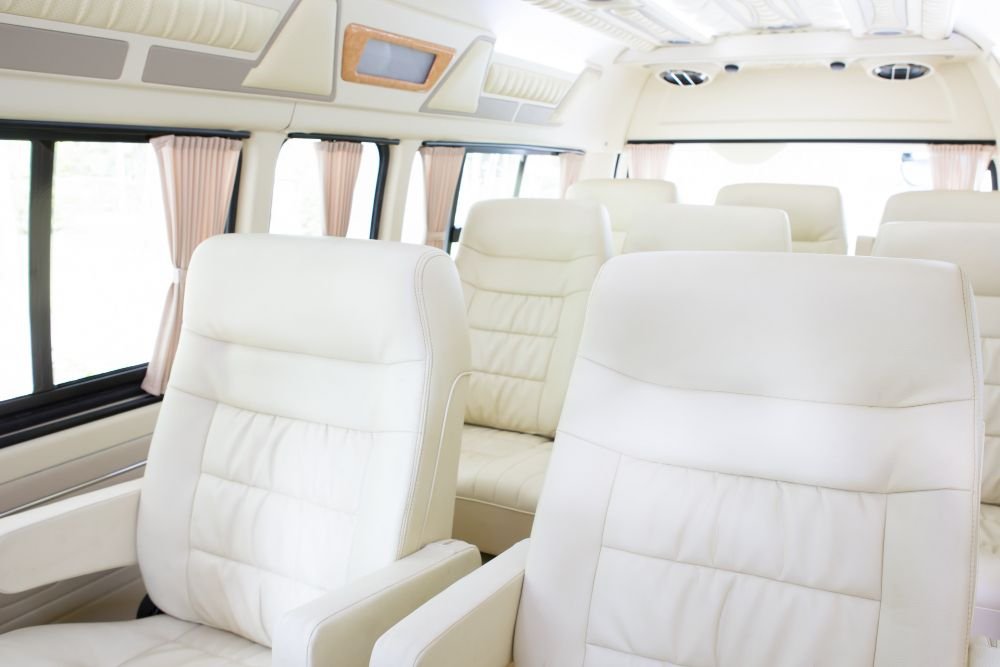
A standard minibus typically features between 8 and 16 passenger seats, which can be extended to 25 seats, accommodating groups from small to large in a single vehicle. This is much implied in the recent research; the UK saw nearly 4,000 new minibuses join the road in 2025, indicating a 23.4% increase in registrations. This highlights a growing shift toward single-vehicle efficiency over multi-car travelling.
Let’s get into more details about the variety of minibus sizes that are legally approved for hire.
Standard Minibus Seating Capacity
Minibus sizes are mainly decided by their seating capacity. Not just that, but driving license, storage capacity and license requirements also factor in to make the vehicle eligible on the road.
- The MPV / Small Van (8-9 seats): This is basically a very large SUV or a "people mover." Being a compact vehicle, you can handle it like a car and can park it in the majority of standard parking spaces.
- The Medium Minibus (12-15 Seats): These are frequently built on a Ford Transit or Mercedes Sprinter chassis and provide more room for people and a separate centre aisle.
- The Large Minibus (17-21 Seats): These vehicles are usually a bridge between a van and a full-size coach. These allow the passengers to enjoy greater stability and comfort, especially on long journeys.
Minibus Capacity Breakdown
Vehicle Type | Legal Max Capacity | Comfort Zone | Best Use Case |
8-Seater MPV | 8 Guests | 6 Guests | The airport runs with heavy luggage. |
12-Seater | 12 Guests | 9 Guests | Small golf trips or social clubs. |
16-Seater | 16 Guests | 13 Guests | School trips and sports teams. |
24-Seater Midi | 24 Guests | 20 Guests | Short-distance wedding shuttles. |
Smart Tips for Picking Your Seat Count for a Minibus
You do not want to waste your budget on the wrong choice of minibus. That is why you must make the right decision for the size of the minibus that accommodates your group and luggage to travel together.
Analyse your Average Crew: Make sure to book your minibus according to the group size and travel requirements. If you usually transport families or small executive teams, then a 12-seater is a good option.
Accessibility First: Planning to include a wheelchair lift or a ramp? Then get ready to give up 2 to 4 of your usual seating spaces. Nonetheless, this exchange is mostly worthwhile to make your service accessible and disability-act-compliant.
Journey Type: Also incorporate journey type into your minibus booking, such as a single day or multi-day travel plans, so you can always make the right choice for your short or long-distance routes.
Luggage Requirements: Do not forget luggage, as it is a crucial part of any journey. Most minibuses provide dedicated luggage storage. Next time, if you are travelling with heavy luggage requirements, do let the service provider know so they can supply you the right minibus vehicle.
How to Legally Determine Your Minibus Capacity
If you are buying or modifying a minibus, you might think that if the vehicle is running, then it is legal. But the thing is, seating capacity is a very strictly regulated safety standard. The following are the methods to make sure your vehicle is not only safe but also compliant:
Check the Manufacturer's Placard
First of all, open the driver's door and check the inner side of the door jamb. That plate is the birth certificate of the vehicle, and it means the maximum number of persons that that chassis can carry safely would be the one posted there.
Review VIN, Specific Documentation
The Vehicle Identification Number can be used for obtaining an original build sheet or a chassis certification document. Those documents basically list what the approved seating configurations are for that particular frame.
Consult Local Transport Authorities
Before you decide on the layout totally, see the regulatory standards for registration, so your configuration conforms to the local laws for your specific license class.
Collaborate with a Certified Upfitter
A professional converter should always be the go-to person for you when you intend to add or relocate seats. Not only do they know how to do it properly, but they also reinforce the seat tracks and install points so that they can withstand demanding crash, test criteria and safety certifications.
The Golden Rule
Never determine capacity based on open floor space. Adding an extra row without official certification can lead to heavy fines, voided insurance, and significant legal liability if an accident occurs.
Legality & License Requirements
This is the most crucial part of the booking process. The number of seats dictates which driver can legally operate the vehicle.
The 8, Seat Rule: According to the license rule in the UK, having a standard license (Category B) means that you can usually run only those cars that have up to 8 passenger seats.
The D1 Requirement: Someone who wants to drive a vehicle with 9 to 16 passenger seats normally needs to have a Category D1 on their license.
Grandfather Rights: Those who passed their driving test before 1st January 1997 may have D1 rights already. However, it is very important to check your license before you drive.
At the end of the day, the right minibus for a trip is the one that finds the right balance of legal safety and passenger comfort. Any trip is not only about reaching a certain number of people, but it is also about having a driver with a license, a vehicle with a certificate, and customers who do not feel cramped.